It’s no secret that I have a soft spot for rare grape varieties. But there’s rare, like Grechetto—unfamiliar to most but easy enough to find while traveling through Umbria—and then there’s truly rare, like Arvisionadu, a grape grown on only a few dozen hectares in Sardinia and virtually unknown even to most Italians. Which is why, on my recent trip to Sardinia, I had to seek it out.
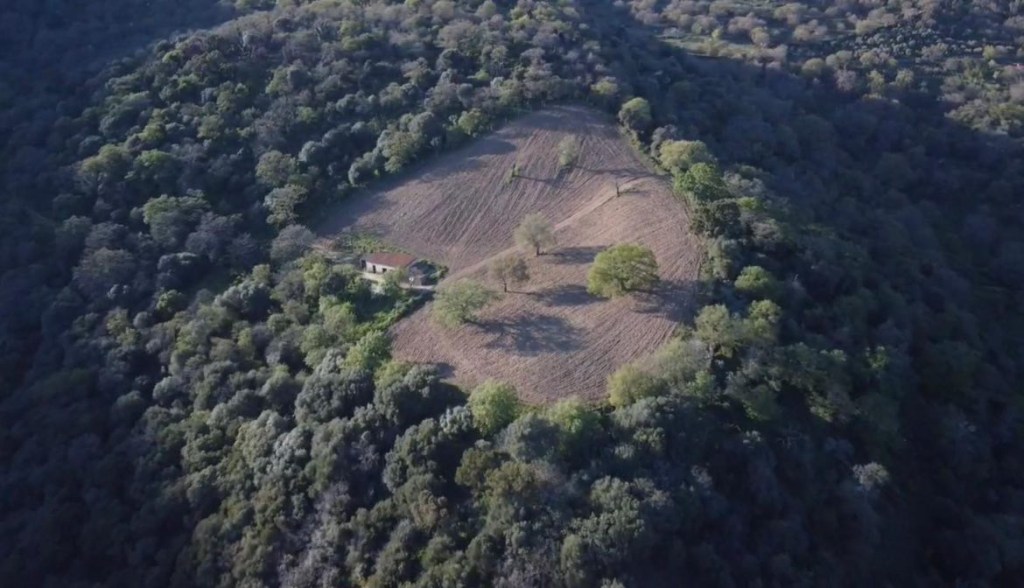
Arvisionadu is grown in the north-central part of the Sardinia, almost exclusively in the Goceano region. It’s indigenous to the island and genetically distinct from other Italian varieties, a notable feat when many rare grapes I write about—take Merenzao for example—often turn out to be synonyms for something else. Arvisionadu has been cultivated on Sardinia for centuries but nearly vanished in recent decades, a casualty of both its low yields and the runaway success of Vermentino, now the island’s signature white. Today, only a handful of producers still bottle it as a varietal wine.
Like Vermentino, Arvisionadu has fresh citrus and saline qualities, but it’s lower in acid and fuller in body. Its character leans more herbal—think chamomile and Mediterranean scrub—with a touch of phenolic grip that’s tactile, like the sensation of chewing on almonds just pulled from fresh clay…in the most interesting way possible.
Cantina Dessena and Tenute Sos Alinos are leading the Arvisionadu charge but there are others, like up-and-coming Goceano wine producer, Marco Sanna from Cantina Montaresu—the winery is named after the Sardinian word for “wind that comes from the mountain,” a nod to the Maestrale (or Mistral, for us Americans) that sweeps in from the northwest. When I sampled an early bottling of Sanna’s Arvisionadu, the wine was breezy and lifted, with those same salty almond flavors I loved so much.

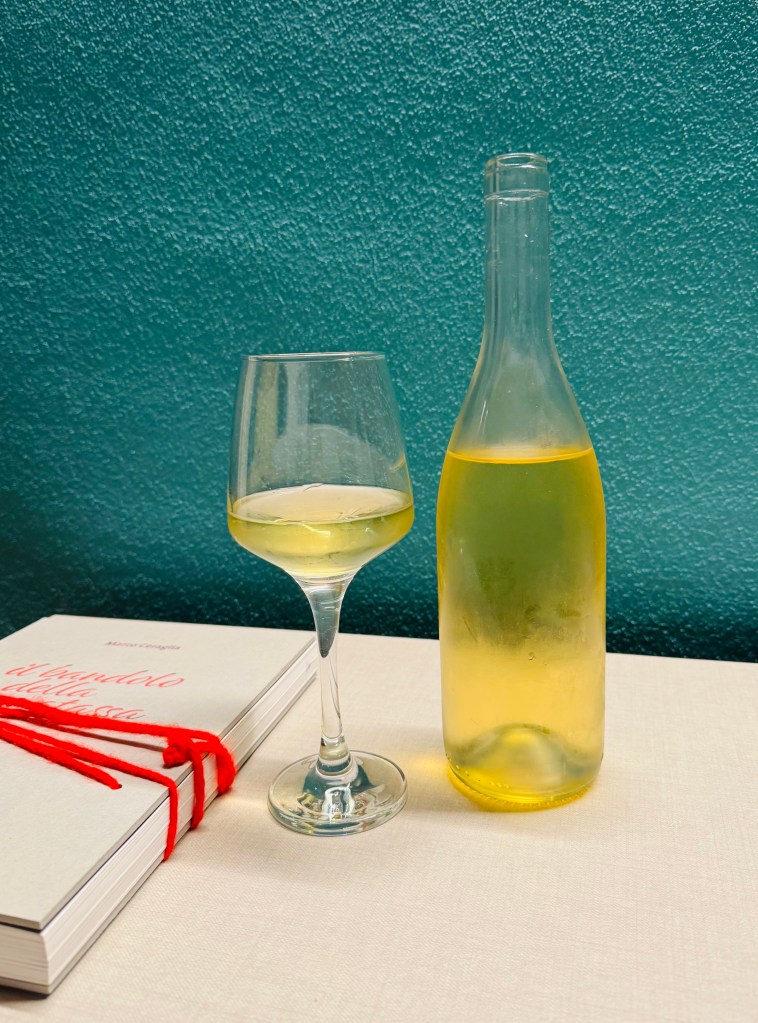
Montaresu plans to debut its first commercial releases next year, focusing on an exciting lineup of native red grapes I’m eager to try—Cannonau, Muristellu, Pascale, Girò, and Nieddu Mannu. The white wines, including Arvisionadu, will have to wait until 2027 after a heartbreaking 2025 harvest, when wild animals decimated the vines just before picking, followed by two brutal hailstorms.
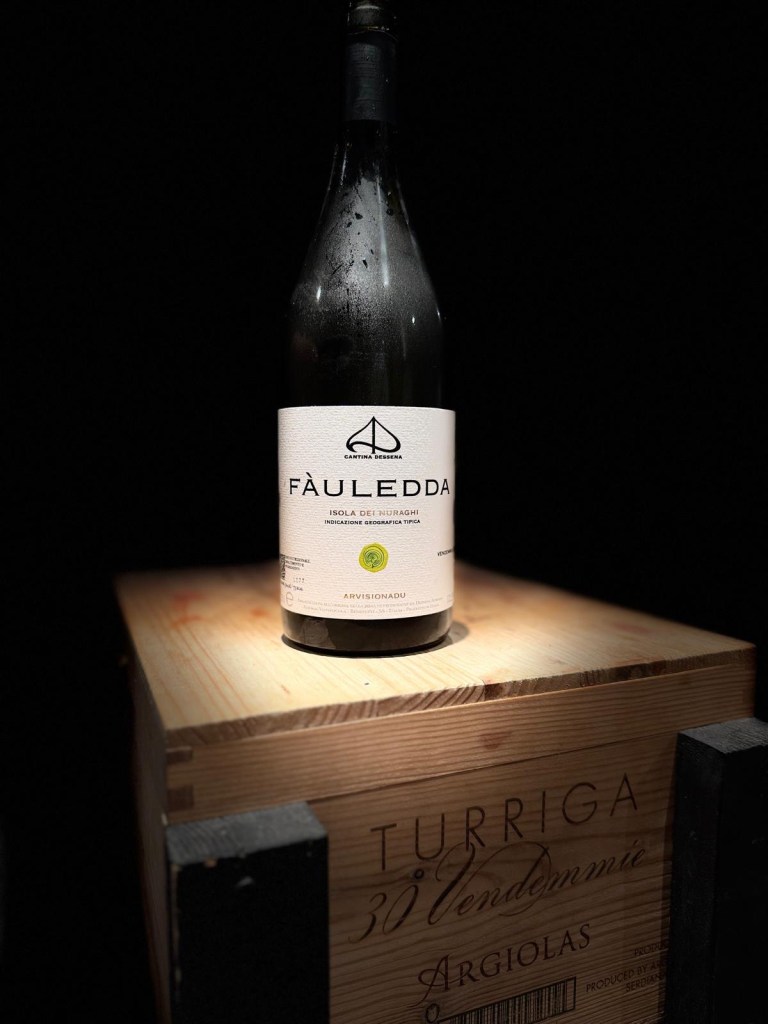
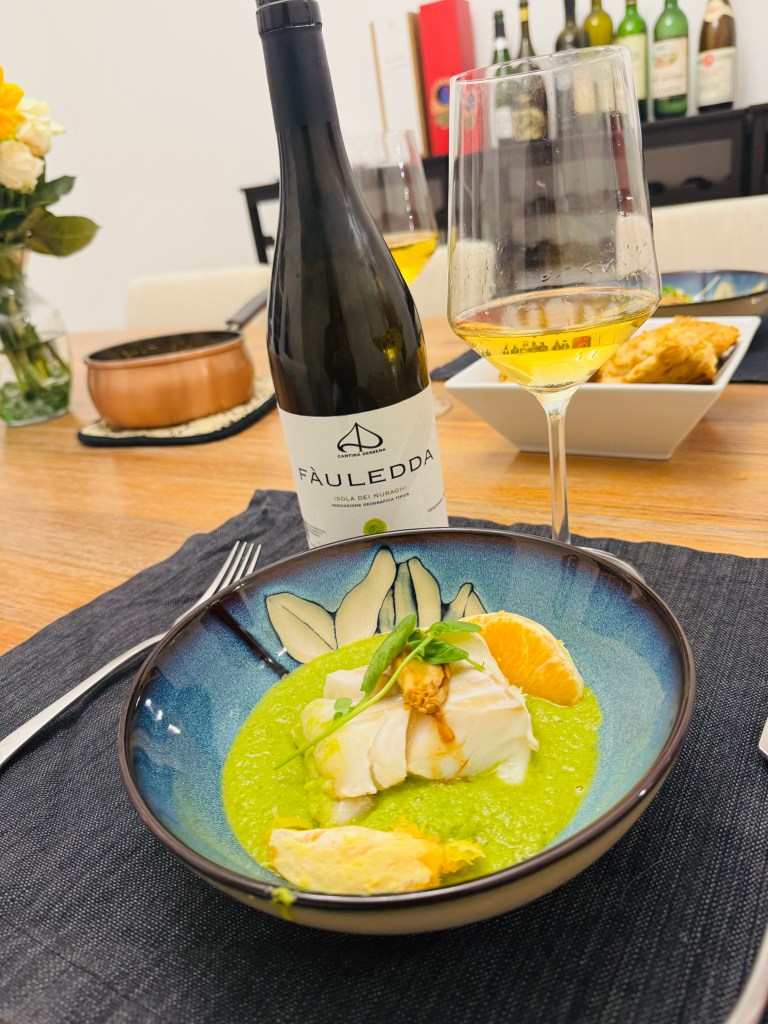
Since I couldn’t yet bring home a bottle of Montaresu’s wines, I opted instead for Cantina Dessena’s Fauledda, a bright, textured white that called for a thoughtful pairing. I created two dishes to mirror its fresh, herbal lift: a delicate mushroom carpaccio to start, followed by cod with watercress and orange sauce.
For the carpaccio, I layered thinly sliced mushrooms with olive oil, lemon, fresh oregano and celery leaves, added toasted garlic for crunch, and crumbled blue cheese over the top for a touch of creamy funk. The wine’s herbal character played beautifully against the earthiness of the mushrooms, while its gentle salinity balanced the richness of the cheese.
With the cod, the watercress echoed the wine’s green notes, and the bursts of orange brought out its citrusy brightness. The Fauledda’s subtle saline edge tied everything together, complementing the delicate flavors of the fish.
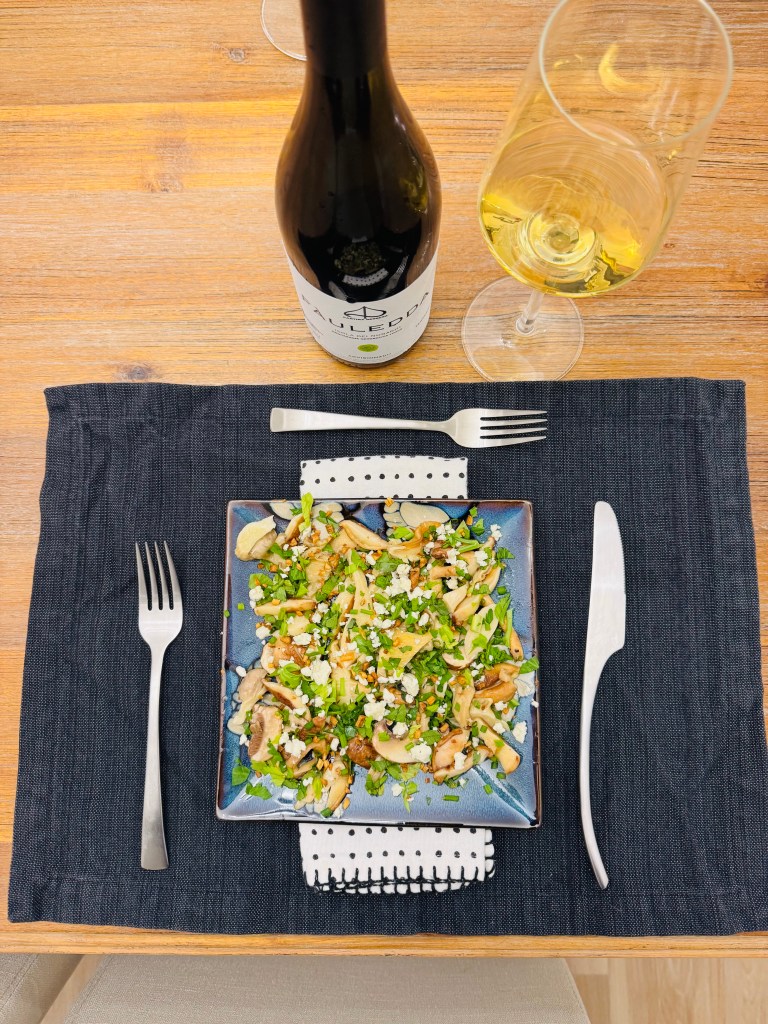
While I loved both pairings, the mushroom carpaccio was my favorite! If you’re inspired to try it at home, you might need a trip to Sardinia to track down a bottle. Until Arvisionadu and Fauledda make their way stateside, reach for another Sardinian staple: Vermentino, a vibrant stand-in with that same sea-kissed freshness.

 Off the Beaten Wine Path