When I was studying Italian wine for my Advanced Sommelier exam, I knew I should be focusing on the classics—things like Barolo’s top cru (Cannubi), the kind of oak used for Brunello di Montalcino (Austrian), or Etna’s red grape (Nerello Mascalese). Instead, I was drawn to the Valle d’Aosta, Italy’s smallest and least populated wine region on the northern border of France and Switzerland. With only 1,100 acres planted, it was a safe bet that it wouldn’t be (and in fact, wasn’t) a question on my upcoming exam. So why the draw? Off the beaten path grape varieties galore.
Prié Blanc was the grape that really caught my attention. It’s grown in the Valle d’Aosta subzone, Blanc de Morgex et del la Salle, and wines labelled as such must contain 100% of the grape. At up to 4,300 feet in the high-elevation foothills of Mont Blanc, it’s one of the highest vineyard altitudes in Europe. Many of the vines are still on their own rootstock—phylloxera can’t survive the region’s sandy granite soils and cold mountain climate. The vineyards of Morgex are planted in the pergola style, with vines low to the ground, hovering on their horizontal trellises in order to soak up heat from the soil; this helps them survive the long winters and windy conditions at such heights. The resulting wines are intensely mineral and racy—my current preference for pairing.
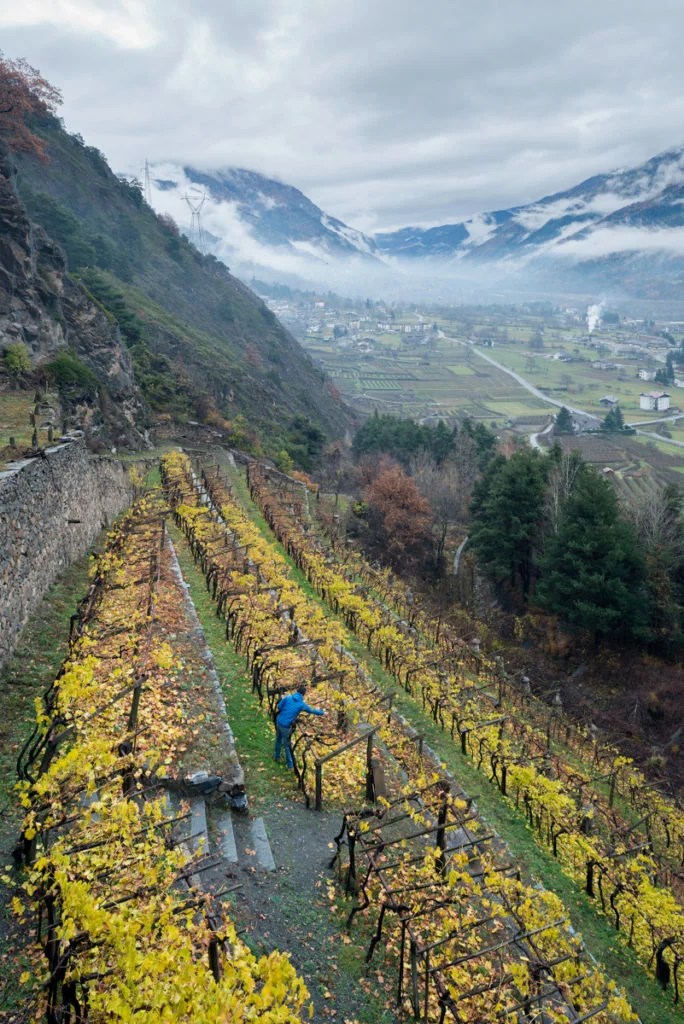
Out of the blue, my dad’s friend text me. He was in Italy around Lake Como and looking for wine recommendations. I told him about the beauty of Valtellina, a high altitude, lifted style of Nebbiolo grown just north of the lake. Then I text, “Any chance you’re going to Valle d’Aosta?” He was. I paused. I meant to make a casual suggestion—a sort of joke-plea—but instead blurted, “I’ll pay you anything to bring me back a bottle of Prié Blanc.” Not only did he not charge me, he brought me two.
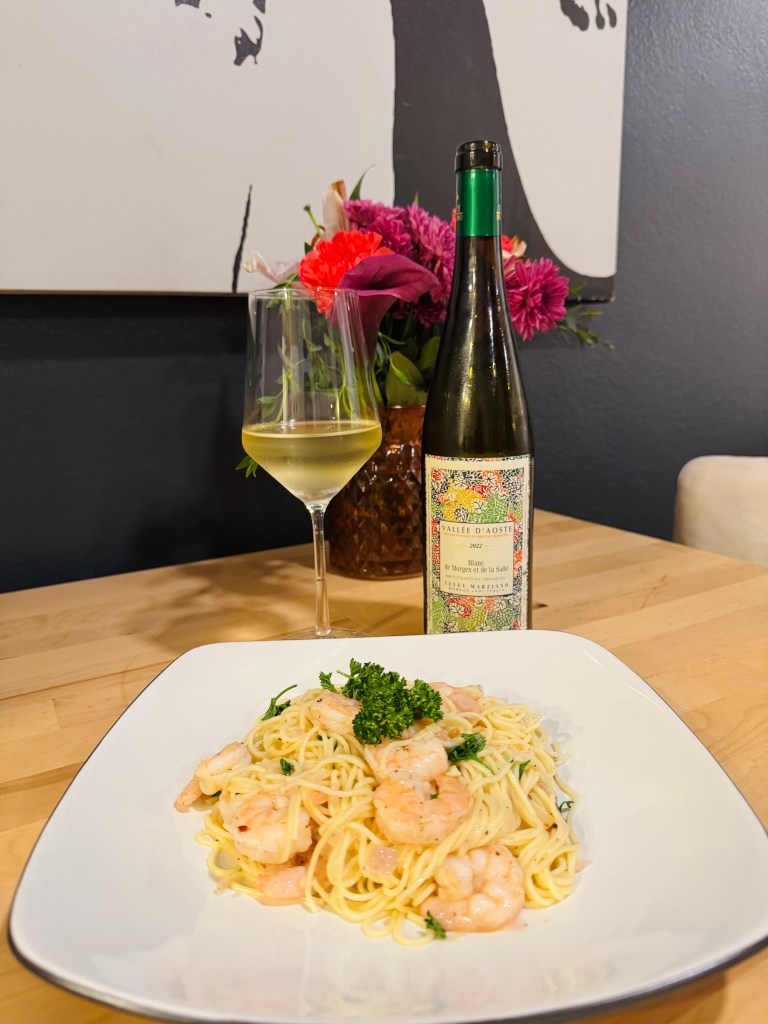
The first was a 2022 by Vevey Marziano, a family-owned winery started in 1981 that focuses on sustainable and low-intervention practices, using organic and biodynamic methods. When I tasted the wine, it was fresh, with white alpine florals, green herbs, lemon citrus and a long wet-stone mineral finish.
In the Valle d’Aosta, this wine is often paired with sharp Raclette cheese, vegetable based dishes, and fresh seafood. Immediately, I thought of shrimp scampi. This wine’s citrus acted like a squeeze of lemon, and the acidity brightened the butter-based sauce perfectly.
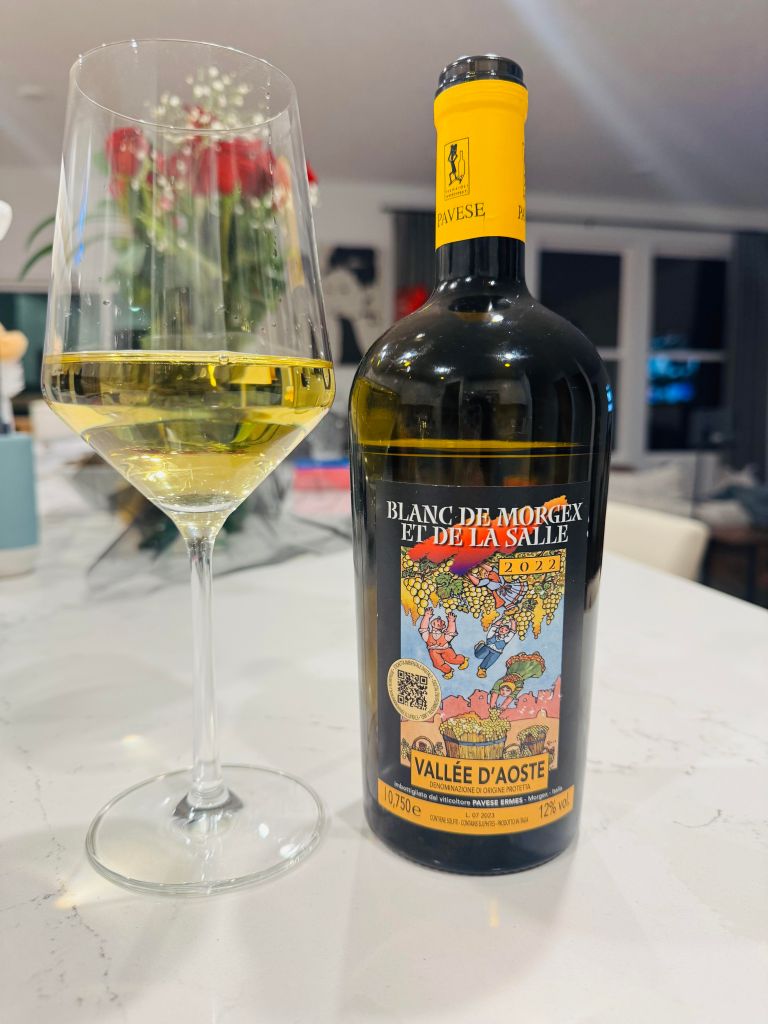
The second bottle was a 2022 Ermes Pavese Blanc de Morgex et de la Salle Prié Blanc. Winemaker Ermes Pavese works with his son, Nathan, and daughter, Ninive, on 18 1/2 acres of land dedicated to the grape. His vineyards climb upwards with the help of terraces and stone walls and the pergola system allows the leaves to form a sort of protective umbrella over the grapes shielding them from high winds.
This wine smells like lemon cream cut by mineral water and gentian flowers. On the palate it starts with racy acid and juicy citrus before finishing with an interesting gritty texture like finely crushed gravel rolled in a spatter of almond oil. That may sound like a weirdly pretentious description, but you’ll have to excuse my romanticized notations because this wine made me feel like I was there in the mountains, wind at my back, taking in the sunset (while I wished it was just a little bit warmer). Prié Blanc is a grape that can transport you to those heights, and I hope you seek it out to try for yourself.
A big thanks to Dean and Joanne who brought these wines home for me and making this story possible.

 Off the Beaten Wine Path